
Ohio’s Move to Standard Time: How Earlier Darkness Affects Driving and Pedestrian Safety
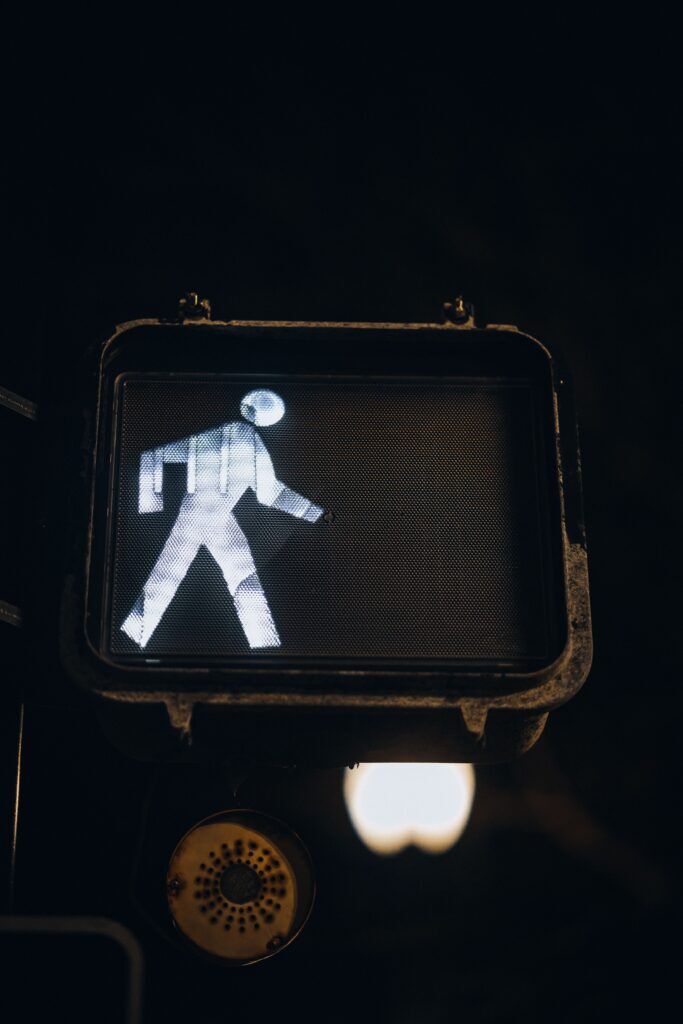

When daylight saving time ends, sunset suddenly arrives earlier relative to work, school, and evening travel schedules. Drivers who were used to commuting in daylight may find themselves navigating the same roads in darkness, while pedestrians and cyclists can become much harder to see. Studies measure different kinds of crashes and time periods, so they do not tell one simple story about overall crash risk.
Research does, however, point to a particular concern for people walking and biking during the darker evening commute. For Ohio drivers, pedestrians, and cyclists, the practical change is immediate: familiar evening routes may now be traveled in darkness, sometimes alongside wet pavement, glare, or fallen leaves.
Why Can the End of Daylight Saving Time Make Ohio Roads More Dangerous?
The fall time change moves sunset earlier relative to everyday schedules, placing more commuters on the road after dark. Headlight glare, long shadows, poorly illuminated streets, and rapidly changing light conditions can make hazards more difficult to recognize. Drivers who routinely traveled home in daylight may suddenly face reduced visibility at the same time that pedestrians and cyclists are using crosswalks, shoulders, parking lots, and neighborhood streets. Fall weather, wet pavement, fallen leaves, and shorter days can further limit traction and visibility.
Why Are Pedestrians and Cyclists Especially Vulnerable After Dark?
Pedestrians and cyclists are smaller and less visible than motor vehicles, giving drivers less time to recognize and respond to them after dark. Evening commuters may suddenly encounter people walking or biking in darkness at intersections, crosswalks, parking lots, and road shoulders that were previously visible in daylight. Dark clothing, limited street lighting, turning traffic, and competing headlights can make detection even more difficult. An Insurance Institute for Highway Safety analysis of U.S. fatal crashes found that after the fall transition to standard time, fatal pedestrian and bicyclist crashes increased, even as motor-vehicle-occupant fatal crashes decreased. This illustrates that changing light conditions do not affect every road user in the same way.
A driver’s account of what was visible may differ from what cameras and witnesses show. If you or someone you love was injured while walking or biking after dark, you do not have to sort through the evidence alone.
Contact Friedman, Domiano & Smith for a free consultation about what happened.
What Does Ohio Law Require When Driving After Dark?
Ohio requires vehicles to display their required lights from sunset to sunrise and whenever insufficient natural light or unfavorable weather makes people, vehicles, and substantial objects indiscernible at 1,000 feet. Headlights must provide enough illumination to reveal people, vehicles, and substantial objects at a safe distance ahead. Ohio law also requires drivers to travel at a reasonable and proper speed for the traffic, road surface, roadway width, visibility, and other existing conditions, and to maintain a speed that allows them to stop within the assured clear distance ahead.
These requirements are addressed in Ohio Revised Code § 4513.03, 4513.15, and 4511.21. Crosswalk right-of-way can also matter in a nighttime pedestrian crash; Ohio law addresses it in R.C. § 4511.46. The specific signals, location, and movements of the people involved still need to be reviewed.
How Is Fault Determined After a Dusk or Nighttime Accident?
A driver traveling below the posted speed limit can still be going too fast for the actual visibility and road conditions. Fault depends on the circumstances of the collision, including whether the driver used appropriate lights, kept a lookout, and had enough room to stop. Investigators may consider darkness, glare, weather, traffic, roadway conditions, available sight distance, headlights, attention, and the driver’s response before the collision. Streetlights, crosswalks, traffic signals, the pedestrian or cyclist’s position, clothing, and overall visibility may also be relevant. An injured person should not assume that being hard to see settles the question of fault. Dashcam, surveillance, and traffic-camera footage can help establish the lighting and roadway conditions at the time of the crash, while witness statements, photographs, vehicle damage, and accident reconstruction may help show what the driver reasonably could have seen and whether the chosen speed allowed enough time to react.
What Should You Do After a Dusk or Nighttime Accident in Ohio?
Get to safety, seek medical attention, and report the collision to law enforcement. Request the report number and keep records of your symptoms, treatment, and expenses. If you can do so safely, photograph the roadway, crosswalks, traffic signals, vehicle positions, damage, and lighting conditions. Record the time and location, then consider documenting the scene again at the same time of day under comparable conditions. Preserve dashcam footage and identify nearby businesses, homes, or traffic systems that may have surveillance video before it is overwritten.
Collect witness contact information and preserve clothing, bicycle equipment, and other items that may help show visibility or impact. Early legal guidance can be especially important when the parties dispute what could be seen, whether the driver’s speed was safe for the conditions, or how quickly the driver should have responded.
Questions about lighting, speed, and right-of-way can feel difficult to untangle while you are recovering. Friedman, Domiano & Smith can help review the available evidence and explain your options.
Contact FDS to tell our team about the crash.
Frequently Asked Questions About Dusk and Nighttime Accidents in Ohio
Do car accidents increase when daylight saving time ends?
Research is mixed on whether the fall clock change causes an overall increase in crashes. A study using crash data from six U.S. states found a 6% increase in crashes in the four weeks after the fall change. A separate IIHS analysis found little overall change in fatal crashes around the time changes, but an increase in fatal pedestrian and bicyclist crashes after the fall transition. Those findings examine different crash outcomes and should not be read as a single Ohio-specific estimate.
For more detail, visit the National Library of Medicine.
Are headlights required at dusk in Ohio?
Ohio requires vehicle lights from sunset to sunrise, when people or substantial objects are not discernible at 1,000 feet because of poor natural light or weather, and when windshield wipers are used because of precipitation. Drivers should not wait for full darkness if those conditions apply.
Can a driver be liable for hitting a pedestrian at night?
Yes, depending on the evidence, although darkness does not automatically eliminate a driver’s responsibility. Fault depends on factors such as visibility, speed, attention, pedestrian location, right-of-way, lighting, and the circumstances surrounding the collision.
What evidence is important after a nighttime pedestrian accident?
Photos and video of the lighting conditions, surveillance footage, dashcam recordings, witness statements, vehicle damage, traffic controls, and information about the driver’s actions can all be important.
When should I contact an attorney after a nighttime accident?
Contact an attorney as soon as you are safely able. Camera footage may be overwritten, and lighting can be difficult to reconstruct later. Early guidance can help preserve evidence and answer questions about fault without leaving you to make that assessment alone.
If a nighttime crash left you unsure who was responsible or what to do next, we are here to listen. Contact FDS for a free consultation. There is never a charge to ex
Related Posts



Comments are now closed
Comments