
Ohio’s Hands-Free Law: How Distracted Driving Citations Affect Fault in a Car Accident Claim
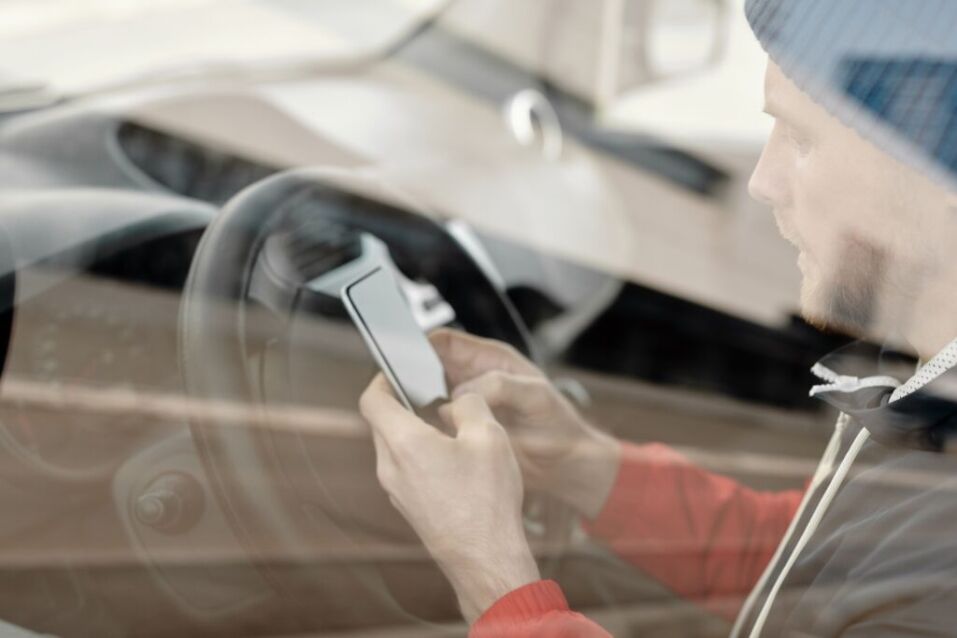

If another driver was looking at a phone before hitting your vehicle, you may wonder whether a distracted driving ticket proves your case. You may also worry that you have no claim if the police did not issue a citation.
Neither conclusion tells the whole story. Ohio’s hands-free law addresses certain electronic device use while driving, but civil responsibility depends on the evidence connecting a driver’s conduct to the collision and your injuries.
Friedman, Domiano & Smith (FDS) helps injured people understand that distinction and the evidence that may matter after a distracted driving accident.
What Does Ohio’s Hands-Free Driving Law Prohibit?
Ohio’s distracted driving law, under Ohio Revised Code Section 4511.204, generally prohibits using, holding, or physically supporting an electronic wireless communications device while operating a vehicle. Texting, scrolling social media, and manually entering information generally fall within that prohibition, subject to statutory exceptions.
Exceptions cover certain hands-free functions, qualifying single-touch or single-swipe interactions, navigation, and emergency communications. The law also permits certain use while stationary at a red signal; being stopped in ordinary traffic is not a blanket exception. It includes a limited exception for holding a phone near the ear for a call without manually entering information.
Officers may stop a driver for a visually observed violation without another traffic offense. Drivers younger than 18 face additional restrictions under a separate statute.
Permission to use a particular function does not mean a driver can safely ignore traffic. A distraction may matter to a collision even when the specific phone-use prohibition does not apply.
Can a Distracted Driving Citation Help Prove Fault After a Car Accident?
A citation may identify an officer’s allegation of unlawful device use and lead to evidence worth investigating. It does not automatically prove that the cited driver caused the crash or is responsible for every claimed injury. Whether particular records or statements can be used in a civil case also involves evidentiary rules.
A traffic case and a civil personal injury claim address different questions. In the civil claim, the investigation must connect the driver’s conduct to the collision and resulting harm. Did looking at a screen delay braking? Did entering information lead the driver to miss a traffic signal or drift into another lane?
Police observations, witnesses, video, and reconstruction evidence can help answer those questions. A driver may still be responsible for a distracted driving accident when no ticket was issued, including when the officer did not personally observe the distraction.
If you suspect phone use contributed to your injury, contact FDS for a free consultation. You do not need to wait for a citation before asking our team to review what happened.
What Evidence Can Help Establish Distracted Driving in an Ohio Car Accident Claim?
An investigation into a distracted driving car accident may combine several sources rather than rely on a single record:
- Police reports may describe observed phone use, driver statements, and citations.
- Witnesses may have seen a driver looking down or holding a phone before impact.
- Dashcam, traffic-camera, or nearby surveillance footage may show driver behavior or vehicle movements.
- Phone records and device data may help establish activity around the time of the crash, subject to lawful access and privacy requirements.
- Vehicle data, damage patterns, skid marks, and reconstruction may help explain braking and reaction time.
Each source has limits. A record of phone activity may not establish who was using the device or whether the activity caused the crash. Likewise, a lack of visible braking does not by itself prove phone use.
Our attorneys at FDS can evaluate the evidence together and take appropriate steps to preserve records or recordings before they become unavailable. Do not try to access another person’s phone or accounts yourself.
How Does Distracted Driving Affect Negligence and Compensation Under Ohio Law?
A personal injury claim generally requires proof of a duty of care, a breach of that duty, and a connection between the breach and compensable harm. A statutory violation may affect that analysis, but its legal effect depends on the applicable law and circumstances.
An insurance company may dispute whether distraction caused the collision or argue that another driver’s actions contributed. Ohio’s modified comparative negligence law reduces compensation in proportion to an injured person’s share of fault. Recovery may be barred when that share exceeds the combined fault of the other responsible parties.
Depending on the evidence and applicable law, recoverable losses may include medical expenses, lost wages, pain and suffering, and other harm. Evaluating a claim requires reviewing both responsibility and the consequences of the injury.
Ohio Revised Code Section 4511.991 also addresses distracted activity contributing to certain moving violations. This is another reason an investigation should consider the driver’s overall conduct rather than focus only on whether a hands-free citation was issued.
What Should You Do If You Are Injured by a Distracted Driver in Ohio?
Seek medical attention and report the collision to law enforcement. Tell responding officers about phone use or other distracted behavior you personally observed. Distinguish what you saw from what you suspect.
When safe, photograph vehicle damage, roadway conditions, traffic controls, and the surrounding area. Collect witness contact information and preserve dashcam recordings. Identify nearby homes or businesses with cameras so relevant footage can be requested promptly.
Keep medical records, repair estimates, accident reports, and insurance communications. Preserve your own relevant records as well. Contact an Ohio car accident lawyer as soon as you are safely able to discuss evidence preservation, insurance questions, and your legal options.
Frequently Asked Questions About Ohio’s Hands-Free Law and Distracted Driving Accidents
Is texting while driving illegal in Ohio?
Yes, texting while operating a vehicle is generally prohibited. Ohio’s law contains specific exceptions, and the circumstances of any alleged violation matter.
Does a distracted driving ticket automatically make someone at fault for an accident?
A civil claim requires analysis of the driver’s conduct, whether it caused the collision, and the resulting injuries. A citation may lead to relevant evidence but does not decide the claim by itself.
Can I pursue a car accident claim if the other driver was distracted but did not receive a ticket?
A citation is not required to pursue a claim. Witness accounts, video, device records obtained through appropriate legal procedures, and other evidence may help establish what happened.
Can both drivers share fault in an Ohio distracted driving accident?
Multiple parties may contribute to a collision. Ohio’s comparative negligence rules can affect the compensation available when an injured person also shares responsibility.
When should I contact an attorney after an accident involving a distracted driver?
Contact an attorney as soon as you are safely able. Recordings and other evidence may become unavailable. You do not need to wait for a ticket or decide whether your case is strong enough before reaching out.
Discuss Your Distracted Driving Accident With FDS
Questions about a phone, a ticket, or an insurer’s account of the crash should not leave you to decide fault alone. FDS helps injured people across Northeast Ohio review the available evidence and understand their options.
Contact FDS for a free consultation about your distracted driving accident. Whether or not the other driver received a citation, our team can discuss the circumstances and next steps. There is no fee unless we recover compensation for you.
Call 216-621-0070 to speak with our team.
Related Posts




Comments are now closed
Comments